

 How Cannabis Seeds Grow: Complete Beginner Guide
Understanding how cannabis seeds grow gives beginners a useful introduction to one of nature’s most fascinating plant life cycles. A cannabis seed contains the genetic information needed to develop into a complete plant. Once a viable seed receives the right environmental conditions, it begins a biological process that moves from germination to seedling development, vegetative growth, flowering, and, when pollination occurs, seed production.
This guide explains the cannabis seed lifecycle in simple terms and introduces the differences between regular, feminized, and autoflowering seeds.
What Is a Cannabis Seed?
A cannabis seed is a reproductive structure that contains an embryo, stored nutrients, and a protective outer shell. The embryo carries genetic information from its parent plants. Different genetic combinations create differences in plant structure, aroma, flowering characteristics, cannabinoid profiles, and other traits.
Seed quality can vary considerably. A healthy, mature seed generally has a firm outer shell and a developed appearance, while immature or damaged seeds may have lower viability.
Stage 1: Germination
Germination represents the beginning of a cannabis plant’s life. The seed absorbs moisture, which activates metabolic processes inside the embryo. The protective shell eventually opens, allowing the embryonic root to emerge.
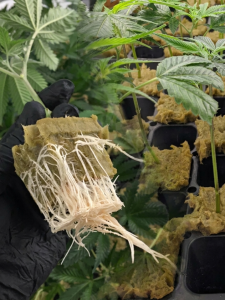
The first root, known as the radicle, becomes the foundation of the developing root system. At the same time, the embryo begins developing a young stem and its first leaves.
Temperature, moisture, oxygen, and seed viability all influence germination. Excessive moisture can reduce oxygen availability, while insufficient moisture can prevent the biological processes required for the seed to activate.
Stage 2: The Seedling
After germination, the plant enters the seedling stage. The young plant develops its first leaves and begins producing energy through photosynthesis.
Cannabis seedlings initially produce small, rounded leaves called cotyledons. These structures contain stored nutrients that support early development. As the seedling matures, it begins producing characteristic serrated cannabis leaves.
During this stage, the plant remains relatively small and delicate. Its developing roots establish the foundation for later growth, while its leaves become increasingly important for photosynthesis.
Stage 3: Vegetative Growth
Once the plant develops beyond the seedling stage, it enters the vegetative stage. During this period, cannabis plants generally focus on producing stems, branches, leaves, and roots rather than flowers.
Genetics strongly influence how a plant develops. Some varieties remain relatively compact, while others naturally develop substantial vertical growth and branching. Indica-dominant, sativa-dominant, and hybrid genetics can display noticeably different structures.
The plant also develops more mature leaves during this period. As the root system expands, the plant becomes increasingly capable of supporting larger amounts of foliage.
Stage 4: Pre-Flowering
As cannabis plants mature, they eventually enter a period known as pre-flowering. This stage provides important clues about the plant’s reproductive characteristics.
Regular cannabis seeds can develop into male or female plants. Male plants produce pollen, while female plants produce flowers. This natural variation makes regular seeds particularly important for traditional breeding projects.
Feminized seeds receive special breeding treatment designed to produce predominantly female plants. They appeal to people seeking female genetics, although no seed type should be considered absolutely guaranteed.
Stage 5: Flowering
Flowering represents another major stage in the cannabis lifecycle. Female plants begin developing reproductive flowers, commonly called buds.
During flowering, the plant’s reproductive structures become increasingly visible. Resin glands known as trichomes develop on flowers and surrounding plant material. These structures produce cannabinoids and aromatic compounds called terpenes.
The exact appearance, aroma, flowering duration, and cannabinoid profile depend heavily on genetics. Environmental conditions also influence the final characteristics of an individual plant.
Photoperiod vs. Autoflowering Seeds
Cannabis seeds generally fall into several categories, with photoperiod and autoflowering genetics representing two major groups.
Photoperiod Seeds
Photoperiod cannabis varieties respond strongly to changes in the length of the light and dark periods. Their flowering behavior depends partly on seasonal changes in day length.
Photoperiod genetics include both regular and feminized seeds and encompass an enormous range of traditional cannabis varieties.
Autoflowering Seeds
Autoflowering genetics have a different flowering mechanism. Instead of relying primarily on seasonal changes in day length, these plants possess genetics that cause them to transition into flowering according to age and development.
Modern autoflowering varieties descend from cannabis genetics containing Cannabis ruderalis ancestry. Breeders have combined these characteristics with modern indica and sativa genetics to create contemporary autoflowering hybrids.
Regular, Feminized, and Autoflowering Seeds
Understanding seed terminology helps beginners recognize what they are purchasing.
Regular seeds can produce male or female plants. Breeders often value them because they preserve natural reproductive variation.
Feminized seeds come from breeding processes designed to produce predominantly female plants. They remain popular because female plants produce the flowers that most cannabis consumers associate with the plant.
Autoflowering seeds contain genetics that encourage flowering according to age rather than relying primarily on changes in day length. They can be regular or feminized depending on the particular breeding line.
These categories describe different genetic characteristics, and some seeds can belong to more than one category. For example, a seed can be both feminized and autoflowering.
What Determines How Cannabis Seeds Grow?
Genetics play a major role in determining how cannabis plants develop. Breeders select parent plants for traits such as plant structure, flowering behavior, aroma, resin production, cannabinoid characteristics, and overall genetic expression.
Environmental factors also influence development. Temperature, humidity, light, water availability, growing medium, nutrition, and other conditions can affect plant health and development.
Two plants from the same genetic line can therefore display differences. Genetics provide a framework, while the environment influences how that genetic potential expresses itself.
Understanding Cannabis Genetics
Modern cannabis breeding has created an enormous range of genetic combinations. USA breeders such as Seed Junky Genetics, Compound Genetics, Ethos Genetics, Archive Genetics, Exotic Genetix, Beleaf Cannabis, and other breeding programs have contributed numerous influential lines to contemporary cannabis culture.
Popular genetic families such as Wedding Cake, Kush Mints, Gelato, Zkittlez, Cookies, Runtz, and OG Kush have also become important building blocks for modern crosses.
For beginners researching cannabis seeds, studying lineage can reveal why two varieties may have very different characteristics despite belonging to the same general category.
From Seed to Mature Plant
The cannabis lifecycle follows a natural progression:
Seed → Germination → Seedling → Vegetative Growth → Pre-Flowering → Flowering → Reproduction
Each stage serves a different biological purpose. Germination activates the embryo, the seedling establishes the young plant, vegetative growth builds its structure, and flowering enables reproduction.
The exact timing varies according to genetics and environmental conditions. Autoflowering and photoperiod plants also follow somewhat different flowering patterns.
Final Thoughts
Learning how cannabis seeds grow provides a foundation for understanding cannabis genetics and plant biology. From the moment a seed absorbs moisture to the development of roots, leaves, flowers, and reproductive structures, every stage reflects a combination of genetics and environmental influences.
For anyone exploring cannabis seeds, understanding the differences between regular, feminized, photoperiod, and autoflowering genetics makes it easier to interpret breeder descriptions and product information.
French Cali Seeds offers a broad collection of cannabis genetics from European and USA breeders, making it possible to explore different genetic families and seed categories. Always check the laws applicable to cannabis seeds in your country before purchasing, possessing, importing, germinating, or cultivating them.
Put Text here!!